




























Britain At Play
POA
Laurence Stephen Lowry, R.A. (1887-1976)
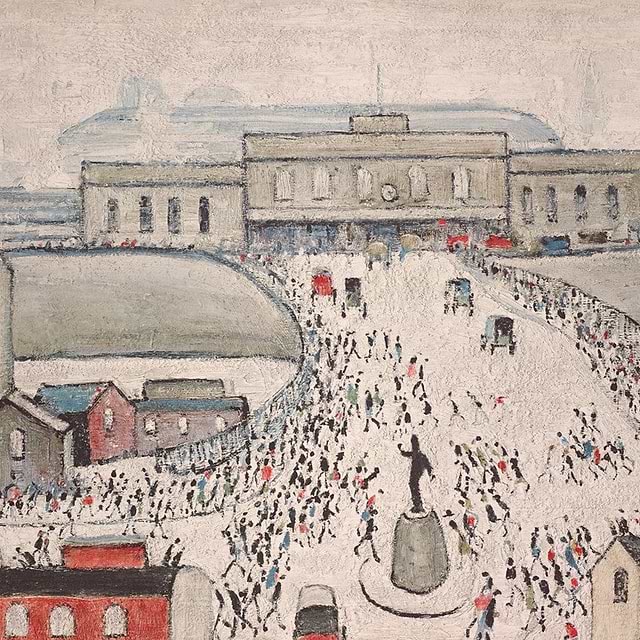
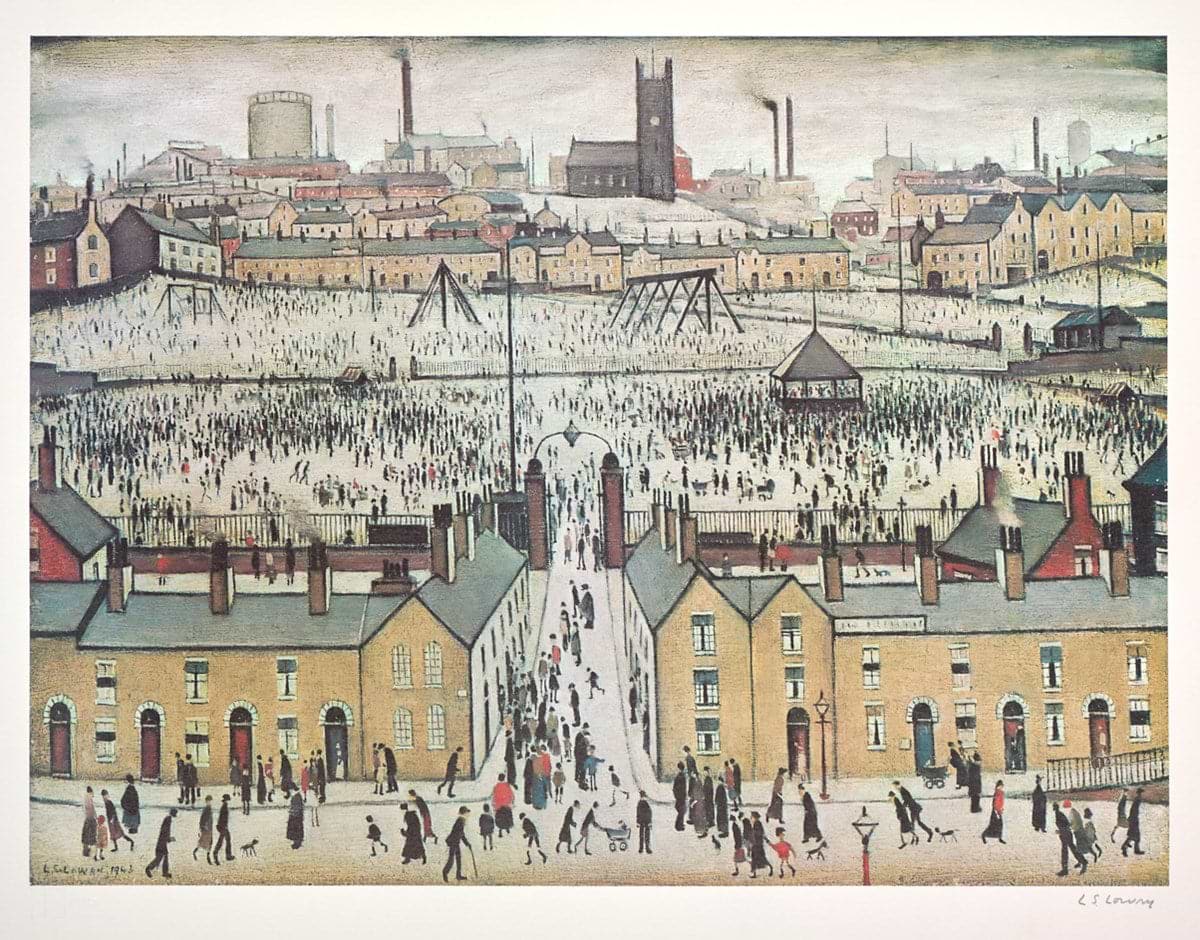
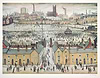
Britain at Play, c.1974-6
Offset lithograph on wove paper, after the original oil painting from 1943 of the same title (Collection: The Usher Museum, Lincoln)
Signed ‘L... Read More


Product Variations
Britain At Play
POA
Laurence Stephen Lowry, R.A. (1887-1976)
Britain at Play, c.1974-6
Offset lithograph on wove paper, after the original oil painting from 1943 of the same title (Collection: The Usher Museum, Lincoln)
Signed ‘L.S Lowry’ lower right in pencil
Stamped by The Fine Art Trade Guild and numbered from the edition of 850
Published by Mainstone Print Publications
Printed by Beric Press Ltd.
Size: 17.5 x 23.5 in. (44.5 x 59.5 cm.)
(Please enquire for availability)
This scene depicts Angel Meadows in Manchester, an area renowned for being the most dangerous slum of the Industrial Revolution during the Victorian era. In 1849, a journalist described it as "The lowest, most filthy, most unhealthy, and most wicked locality in Manchester…It is full of cellars and inhabited by prostitutes, their bullies, thieves, cadgers, vagrants, tramps and, in the very worst sties of filth and darkness, by those unhappy wretches the 'low Irish.” The most infamous section of Angel Meadows was the burial ground of St Michael’s Church – featured in central background of the present work – which was the location of mass graves containing upwards of 40,000 paupers.
Friedrich Engels, socialist philosopher and author, described Angel Meadows as ‘Hell upon Earth”, remarking upon the “filth, ruin, and uninhabitableness, the defiance of all considerations of cleanliness, ventilation, and health which characterise the construction of this single district, containing at least twenty to thirty thousand inhabitants.” Almost one hundred years later, in stark contrast, Lowry chose to depict this area as one of leisure and enjoyment. Instead of his usual subject-matter – figures trudging to or from work – these milling crowds are enjoying a rare day off, enjoying a holiday with their families and loved ones.
Parks were, for many years, centres for community activity, drawing vast numbers of people at weekends and public holidays. The sketches for the swings which Lowry have included in the park in the background are in the collection of the Lowry Collection, Salford. This landscape also includes elements based on Peel Park, Salford, a location Lowry depicted on several occasions over his career. By bringing together aspects of different towns, Lowry creates an imaginary composite scene of a non-specific location, one which is able to represent the Northwest of England more generally, rather than a singular town. Many English towns in Lowry’s native region of Manchester evoked a similar attitude due to their collective connections to the milling industry.
The original Britain at Play painting was first exhibited at the Lefevre Gallery in 1943, then subsequently at the Contemporary Arts Society (1960), The Royal Academy of Arts (1976) and the Artists International Association (1986). Today it hangs in the Usher Museum, Lincoln.
UK Delivery
We offer free shipping on all online orders or collection from one of our galleries if this is more convenient for you.
Orders will usually be received in 7-14 days unless stated after purchase, we will contact you after you have placed your online order to confirm the details and delivery information.
Click here for more information on our delivery fees.
US Delivery
We offer free collection from our Westport gallery. For all online orders, it is important to note that additional charges for customs, duties, VAT, and other applicable fees may arise, and it remains your sole responsibility to settle these charges.
International Delivery
International delivery is available for an additional cost, please contact our client service team for more information.
Laurence Stephen Lowry, R.A. (1887-1976)
Britain at Play, c.1974-6
Offset lithograph on wove paper, after the original oil painting from 1943 of the same title (Collection: The Usher Museum, Lincoln)
Signed ‘L.S Lowry’ lower right in pencil
Stamped by The Fine Art Trade Guild and numbered from the edition of 850
Published by Mainstone Print Publications
Printed by Beric Press Ltd.
Size: 17.5 x 23.5 in. (44.5 x 59.5 cm.)
(Please enquire for availability)
This scene depicts Angel Meadows in Manchester, an area renowned for being the most dangerous slum of the Industrial Revolution during the Victorian era. In 1849, a journalist described it as "The lowest, most filthy, most unhealthy, and most wicked locality in Manchester…It is full of cellars and inhabited by prostitutes, their bullies, thieves, cadgers, vagrants, tramps and, in the very worst sties of filth and darkness, by those unhappy wretches the 'low Irish.” The most infamous section of Angel Meadows was the burial ground of St Michael’s Church – featured in central background of the present work – which was the location of mass graves containing upwards of 40,000 paupers.
Friedrich Engels, socialist philosopher and author, described Angel Meadows as ‘Hell upon Earth”, remarking upon the “filth, ruin, and uninhabitableness, the defiance of all considerations of cleanliness, ventilation, and health which characterise the construction of this single district, containing at least twenty to thirty thousand inhabitants.” Almost one hundred years later, in stark contrast, Lowry chose to depict this area as one of leisure and enjoyment. Instead of his usual subject-matter – figures trudging to or from work – these milling crowds are enjoying a rare day off, enjoying a holiday with their families and loved ones.
Parks were, for many years, centres for community activity, drawing vast numbers of people at weekends and public holidays. The sketches for the swings which Lowry have included in the park in the background are in the collection of the Lowry Collection, Salford. This landscape also includes elements based on Peel Park, Salford, a location Lowry depicted on several occasions over his career. By bringing together aspects of different towns, Lowry creates an imaginary composite scene of a non-specific location, one which is able to represent the Northwest of England more generally, rather than a singular town. Many English towns in Lowry’s native region of Manchester evoked a similar attitude due to their collective connections to the milling industry.
The original Britain at Play painting was first exhibited at the Lefevre Gallery in 1943, then subsequently at the Contemporary Arts Society (1960), The Royal Academy of Arts (1976) and the Artists International Association (1986). Today it hangs in the Usher Museum, Lincoln.


Upon placing an order, we will promptly follow up with an email confirmation of the delivery timeline and address any additional queries you may have about your purchase, payment, or delivery. During this conversation, we will also finalize the details of your preferred delivery method.
Should you need assistance with the installation of fixings or your artwork, our galleries can provide a roster of reliable installers who can lend their expertise. Kindly inform our team before the delivery if such assistance is necessary.
Please note that this service incurs a charge. If your artwork is not yet ready to be hung, we will ensure it remains wrapped and ready for you or your chosen installer to hang at a more convenient time.
The majority of our limited edition artworks and select original pieces are accompanied by a certificate of authenticity. If a certificate is available for the artwork you have ordered, it will be included with your shipment.
Yes, we ship artwork to over 180 countries. Our reliable courier partners, primarily DHL, are entrusted with shipping your artwork worldwide. Occasionally, we may also utilize services from TNT or other similar providers.
For specific details regarding delivery costs, kindly refer to our dedicated delivery page. It is important to note that additional charges for customs, duties, VAT, and other applicable fees may arise, and it remains your sole responsibility to settle these charges.
Once you have made a purchase of your desired artwork, you have the option to either have it conveniently delivered to your home or arrange for collection at a gallery of your preference (excluding our ship-based galleries).
We aim to deliver your order within 7 - 14 days unless stated after purchase.
Prior to delivery, all artworks undergo a meticulous quality check process, which typically takes up to two weeks to complete. After your order is placed, our client services team will contact you with an estimated delivery date.
If you opt for delivery to a gallery of your choosing, an art consultant will reach out to notify you once the artwork has arrived. They will coordinate with you to arrange a convenient time for collection that suits your schedule.
To ensure a secure transit, every artwork is handled with utmost care. We take precautionary measures by using foam edges to protect each side of the artwork, followed by shrink-wrapping for added safety during transportation.
Clarendon Fine Art provides a personalized white glove service that grants you the opportunity to view your preferred artwork in the comfort of your own home. To arrange an appointment with an art consultant, kindly get in touch with a gallery of your preference.
You may also like
Recently viewed
- Choosing a selection results in a full page refresh.